
Thermal Assessment
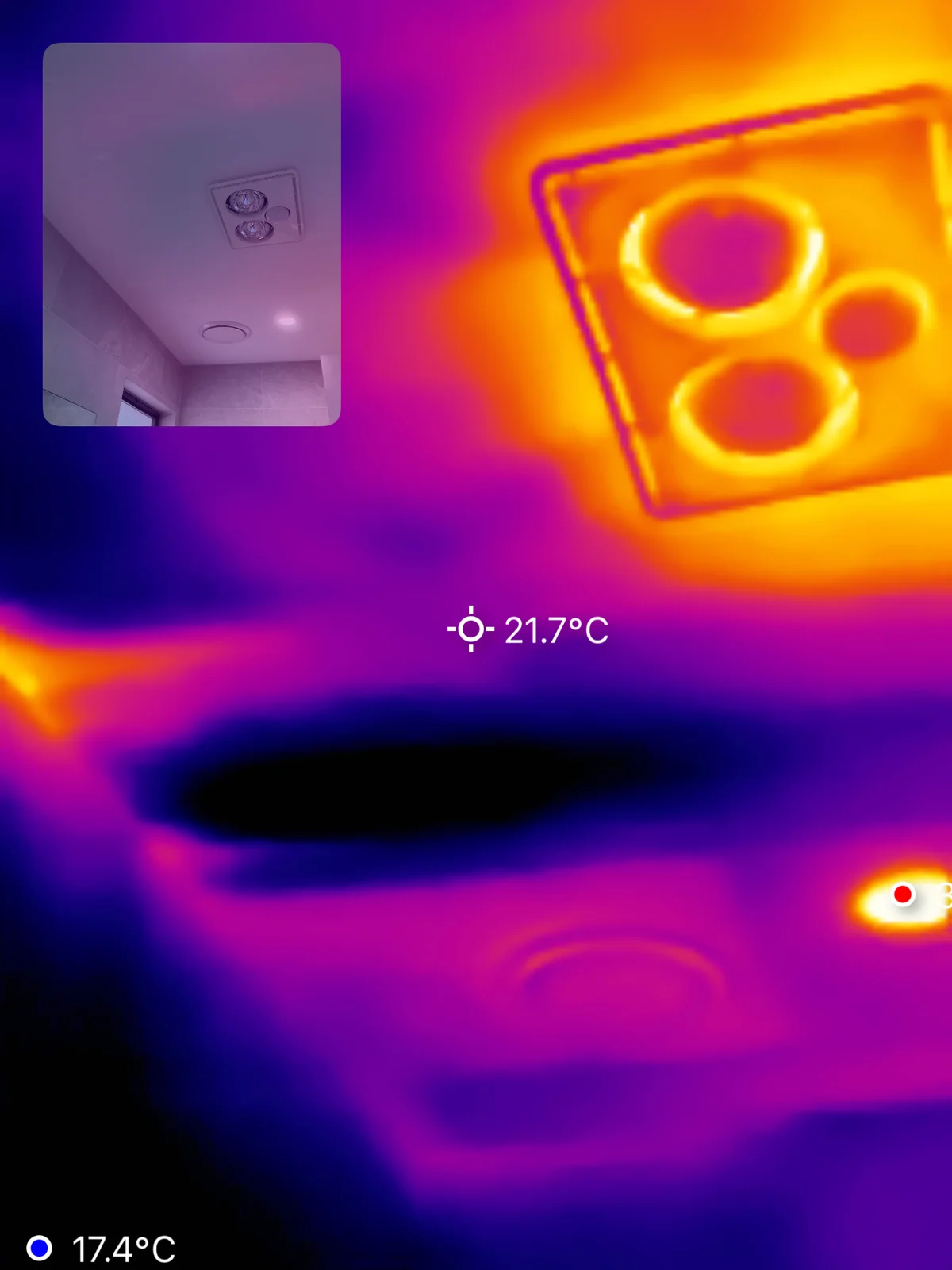
Professional-grade infrared imaging across walls, ceilings, electrical, and plumbing. Thermal anomalies reveal hidden moisture, insulation gaps, overheating circuits, and pipe leaks — issues a visual inspection can't see until they've already caused damage.
A proper look,
not a quick glance.
The audit helps improve energy efficiency and provides a clearer understanding of the property's condition. Using professional-grade infrared cameras, we capture temperature variations across surfaces that reveal hidden defects invisible to the naked eye. With detailed reports and expert insights, you can make informed decisions with confidence.
Ideal for
- Homeowners investigating unexplained dampness or cold spots
- Buyers wanting a deeper assessment beyond visual inspection
- Landlords and property managers assessing building performance
- Building owners after storm, flood, or water damage events
- Energy-conscious owners wanting to improve efficiency
What We Find
01 / 07Thermal imaging detecting a ceiling leak — visible light inset with infrared overlay showing heat signatures
 02 / 07
Thermal scan revealing cold spots and insulation gaps in a room corner
 03 / 07
Infrared imaging of an appliance showing temperature differentials
 04 / 07
Thermal camera scan of ceiling showing heat loss patterns
 05 / 07
Thermal imaging identifying moisture intrusion through a wall junction
 06 / 07
Infrared scan detecting a hidden ceiling leak with temperature readings
 07 / 07
Thermal assessment of ceiling insulation showing cold zones
What we inspect,
end to end.
Walls and ceilings — moisture intrusion, insulation voids, thermal bridging
Roofing — leaks, ponding water, insulation gaps
Windows and doors — air leaks, seal failures, draught paths
Electrical systems — hotspots indicating overloaded circuits or faulty wiring
Plumbing — hidden pipe leaks within walls and floors
HVAC systems — ductwork leaks, inefficient distribution
Subfloor — rising damp, moisture migration
External envelope — thermal performance and weatherproofing integrity
The stakes are
higher than they look.
Many property defects are hidden behind walls, under floors, or above ceilings — invisible until damage is severe. Thermal imaging reveals these issues early, when they're cheapest to fix.
How we do it
differently.
Thermal images are correlated with moisture meter readings and physical inspection on the spot. You get a confirmed diagnosis of each anomaly, not a heat map and a guess.
From booking
to confident decision.
Book & Brief
Contact us with your concerns — unexplained dampness, cold spots, high energy bills, or post-damage assessment. We'll schedule your thermal audit.
Thermal Scan
Our consultant conducts a systematic thermal scan of all accessible areas, capturing infrared images and correlating findings with visual inspection and moisture readings.
Analysis & Report
You receive a detailed report with thermal and visual images side by side, temperature readings, diagnosis of each anomaly, and repair recommendations.
Consultation & Guidance
We walk you through the thermal findings, explain what each anomaly means for your property, and advise on the most effective and cost-efficient repairs.
A report that's
detailed and clear.
Comprehensive reporting delivered through a configurable client portal — accessible across devices, with a streamlined experience that puts every finding, photo, and recommendation a tap away.
Fast. Thorough.
Decision-ready.
24–48 hours from scan, with the full thermal image library and side-by-side visual reference for every anomaly.
Questions,
answered.
Still curious? Give us a call — we're happy to walk through anything specific to your property.
What can thermal imaging actually detect?
Is thermal imaging accurate?
Can it replace a standard building inspection?
When is the best time for a thermal assessment?
Do I need a thermal assessment for a pre-purchase inspection?
Often paired
with this inspection.

Book thermal assessment
with confidence.
Limited daily availability. Get in touch to discuss your property and schedule your inspection — no obligation.